
Author: fkasara
I'm Sara, a Northern Italian with experience in Italy's travel industry and hospitality sector. Other than the classic travel tips, in my blog I mainly share cultural and lifestyle aspects of the Belpaese, that often elude tourists, yet make our country unique.
Be inspired, avoid cliches and let Italy spice up your life!
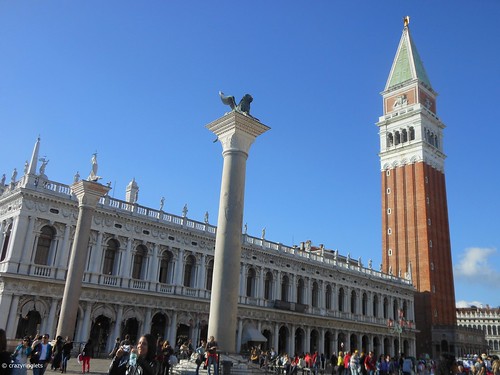
St. Mark’s square under a different perspective (part I): 2 life lessons from the wise Moors of Venice
There’s no doubt, St. Mark’s square in Venice will always be crowded with tourists. Even if there are ‘perils’ like high tides, floods and boardwalks to face, they will never back off and this will remain one of most visited places in the world. Don’t be prejudiced, St. Mark’s square is neither overrated nor a trap. With this series of posts about “St. Mark’s square under a different perspective”, learn with me how to discover it with new eyes.
How to choose a holiday destination able to satisfy everyone? Pick Italy.
Learn why the Belpaese represents a great holiday location, especially if you’re traveling with people who enjoy different things from you.
Let’s say it: traveling with other people can be difficult, especially when you have to accommodate the needs and the desires of your companions and forget about yours for the sake of friendship.
But why sacrificing someone’s desires when you can have it all? This is when Italy comes into play.
 Continue reading “How to choose a holiday destination able to satisfy everyone? Pick Italy.”
Koumaradei, Samos’ ceramic village, and the fair Cup of Pythagoras
Pottery is an ancient art, often passed down from generation to generation. Let’s explore together Koumaradei, the so-called “ceramic village” of Samos, and learn about the Pythagorean Cup, the souvenir symbol of the island.
For those of you who will choose the emerald island of Samos for their summer holidays, a great way to try a bit of experiential travel is through a visit to the “ceramic village” named Koumaradei where you can put into practice some of your best Ghost’s moves at the potter’s wheel. 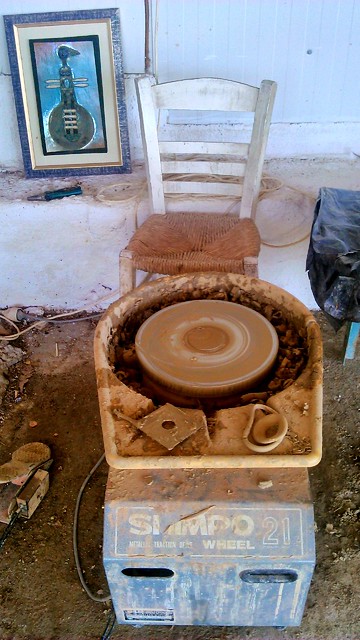
Remember Patrick and Demi? Pottery can be quite sexy…
The village of Koumaradei, located in the hinterland of Samos, has a long tradition of potters: the development of this art is directly related to the ideal raw material offered in the area.
Here you can find plenty of laboratories with annexed shops: they are the ideal spots where to see artisans at work, try to mold something on your own and even buy for a moderate price the Pythagorean Cup, Samos’ most famous souvenir.
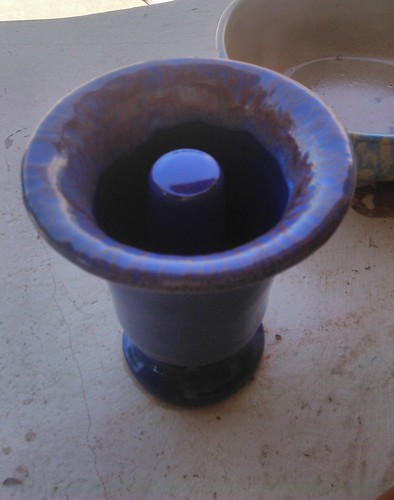
The Pythagorean Cup, also known with the bizarre name of “greedy cup”, is a ceramic goblet that serves as a practical joke device, but that, according to the legend, was invented by Pythagoras in order to punish the avid ones who wanted to drink more than their fair share of wine. Following the Pascal’s principle of communicating vessels, once the level of the liquid rises beyond a certain level, it spills out of the bottom. If the liquid stays below the level, the cup functions normally.
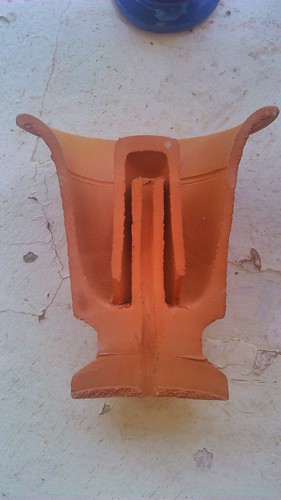 Inside the Pythagorean Cup
You can find variations of this item also in other parts of Greece, where it is sold with the name of “cup of justice”.
Surely a valid idea if you have to pull a prank on your friends ;D
4 Lessons on Happiness from the Island of Samos
Discover what this fascinating North-Aegean island, blessed with thriving vegetation and crystal waters, has taught me about happiness in life.
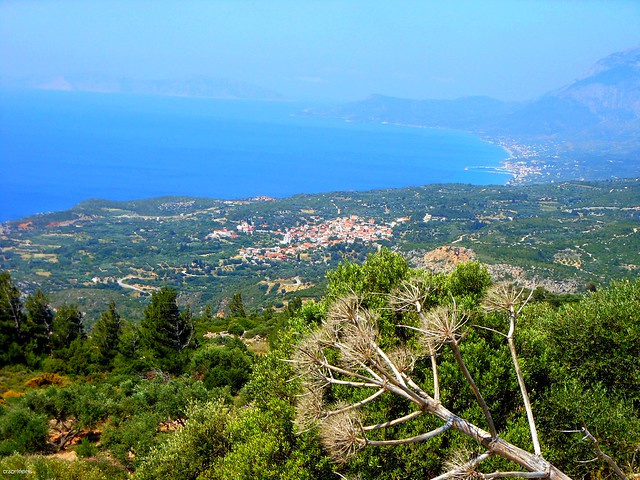
Considering that during this last year, along with Lesbos and Kos, Samos has hit the headlines with refugees’ stories of death and sorrow, it may seem a little inappropriate talking about the “lessons on happiness” I have been taught in here. However, we must not forget that Samos has a long and illustrious history that tells about an island known for centuries as “the fertile” (what better slogan than “fertility” when talking about happiness) and that was the birthplace of Epicurus, the philosopher famous for the Letter on Happiness.
As all the places of the Earth, Samos has something to teach us: let’s discover together the pieces of the happiness’s puzzle that Samos gifted us with:
- LIVE IN THE NOW
This is a quotation you have heard for sure multiple times, but I bet the majority of us was never able to apply it to the fullest. Thanks probably to some philosophers of the past who advised not to trust tomorrow too much, Greek people seem to have integrated this principle in their daily existence. They have a more relaxed approach to life in comparison to other peoples of the western countries. We tend to worry too much about the future and consume ourselves with a series of “what ifs” and “omg, I must prevent this”. It’s surely wise thinking about the future consequences of certain behaviors, but we can’t pretend to control everything. If there is a thing I have learned from people of Samos and Greeks in general is that sometimes it is best for our own wellbeing to face the problems once they spring out and not a minute before.
- PAST IS SOMETHING TO ACKNOWLEDGE, BUT IT MUST NOT DEFINE US
Quoting Epicurus, whereas the flesh fights only with the present, the mind tends to endure the storms of the present, past and future together. We worry a lot about the future and we tend to blame the troubles experienced in the past for our lingering unhappiness. Well, people of Samos taught me that we have to acknowledge our past, accept it for what it is without trying to bury or delete it, but we must fight in order to avoid it would eat us alive.
It might sound odd to you, but I have learned about this particular “principle” observing the works of art in Megali Panagia Monastery near Koumaradei, the “ceramic village” in the hinterland of Samos.
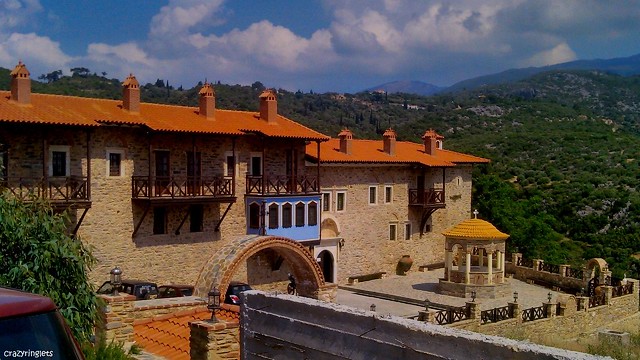
The frescoes at the entrance of the chapel are severely damaged by the slashes made by pirates and those inside are completely blackened by the smoke of the great fire that hit Greece in 2000. Monks didn’t try to restore them and this is something I could not understand. When asked, our tour guide told us:
The troubles are not to be deleted, but rather to be accepted as part of our process. We don’t mourn the lost beauty, we accept the past and go ahead.
- MUSIC AND PHILOSOPHY AS BALMS FOR THE SOUL
Pythagoras, best known for his “theorem”, was born in Samos in the town that was recently renamed after him, Pythagorion.
Famous for his work as a mathematician, not a lot of us know that in his school the study of music played a central role in the “cure of the soul”.
He was also the one who introduced the method of the “autosuggestion” – that consists in memorizing and repeating short aphorisms – which is at the basis of the contemporary self-help system. He was one of the first to understand that music and philosophy are both great means that help achieving the peace of mind, a great tool in the pursue of happiness.
- WE CAN’T BE IN COMPLETE CONTROL OF THE FUTURE
Last but not least an extract from the Letter on Happiness by Epicurus, another philosopher born in Samos:
We must remember that the future is neither wholly ours nor wholly not ours, so that neither must we count upon it as quite certain to come nor despair of it as quite certain not to come.
You definitely will be able to do a lot of soul-searching in Samos.
Web-sources:
Vincent Cook, “Letter to Menoeceus – Epicurus”, The Epicurus & Epicurean Philosophy web site [accessed on the 28th May 2016] http://www.epicurus.net/en/menoeceus.html
An acrostic to say hello!
Hello, my name is

S EEK
A ND
R OAM
A ROUND
and I’m here to welcome you in my blog! Other than hiding myself behind word games and leather jackets, I like to rant about the three T: tourism, travel and territory!
But don’t expect the classic travel blog: even though I believe that online reviews and bloggers’ tips have significantly enhanced the awareness of the travellers, I don’t like when blog posts stop at the surface. I truly believe in the power of travelling, which is the ensemble of those experiences that allows you to become a wiser, healthier and happier human being.
So, if you’d like to experience rather than just seeing things, stick around and discover my travel philosophy.
Find more info concerning the blog and myself in the about page.
See ya 😉
 My Dear Italia